Bulgaria in the Rhythm of Change — an Article by the Head of Our Bulgaria Branch
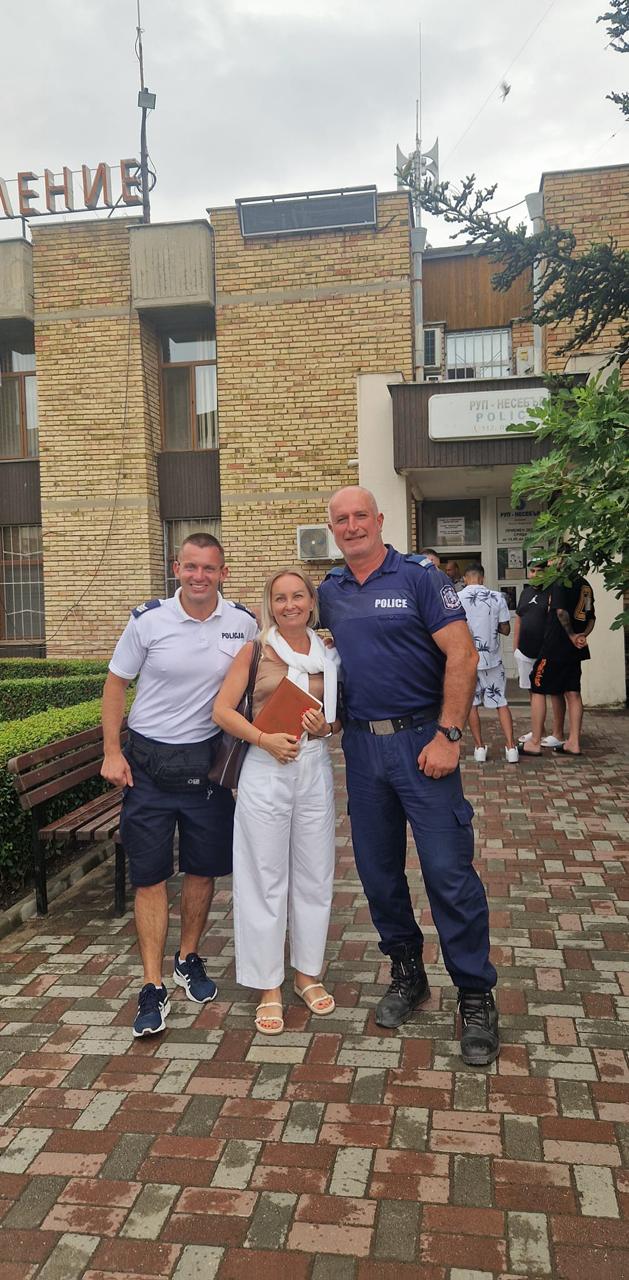
An article by Magdalena Tekla, head of our branch in Bulgaria, appeared in the spring-summer issue of "All Inclusive" magazine. We are publishing it in full.
This Balkan country offers something subtle: a sense of authenticity discovered slowly in the taste of home cooking, in conversations over coffee, in the landscape and in history written into the walls of its towns. After years of transformation, it has chosen to be itself, combining tradition with modernity in a natural, unobtrusive way.
Twenty-first-century Bulgaria has clearly picked up speed. The changes are visible not only in big cities but also off the beaten tourist track, in infrastructure, public spaces and residents' everyday lifestyle. The key moments of this process were accession to NATO (29 March 2004), the European Union (1 January 2007) and the Schengen Area (full membership from 1 January 2025), and, in January 2026, the eurozone. They not only strengthened the country's position in Europe but also gave momentum to change. Today this can be described as a new era of development, more conscious, consistent and firmly anchored in the European context.
Transformation does not, however, mean a break with the past. On the contrary, the ability to combine tradition with modern solutions has become one of Bulgaria's distinguishing features. Cultural heritage, local customs and historic sites do not disappear under the pressure of change but coexist with it, creating a unique mosaic. As a result, the country is less and less often seen solely through the prism of its history, and more and more as a state in a dynamic, well-planned process of development.
The changes are not just declarations. They can be seen in renovated squares and streets, new roads, more efficient transport, and tourism and hotel projects that are gradually changing how the country is perceived. For visitors, this means a place in motion and developing, yet keeping its own rhythm and character.
The evolution concerns not only the scale of investment but also the way of thinking about development. A process of shaping modernity on its own terms is becoming increasingly visible, without giving up local identity, pace and the rhythm of the place. Bulgaria does not copy Western models but adapts them to its own context, combining European standards with regional character and social continuity. In doing so, it frees itself from simplified notions and reveals a country far more complex and mature than its former image as a purely tourist destination suggested.
Alexander Nevsky Cathedral in Sofia, Bulgaria, taken in May 2019, taken in HDR
Closer Than It Seems
In recent years Bulgaria has increasingly made its presence felt on the European travel map, becoming a friendly and even more accessible destination. A good example of this change is the growing interest among tourists from Poland, who in recent seasons have become one of the fastest-growing groups visiting Bulgaria. An ever denser network of air connections means that Burgas, Varna or Sofia can now be reached from many Polish cities. Ryanair, Wizz Air and LOT aircraft operate regular routes from Warsaw, Kraków, Katowice, Wrocław, Poznań and Gdańsk. A direct flight of just 2 hours is enough to reach Sofia, today as easy to get to as most European capitals.
Just a decade ago our business there was seasonal. Today Bulgaria is a year-round destination. It is a market that is growing faster than expected, says Alicja Wójcik‑Gołębiowska, Country Manager Ryanair CEE & Baltics. Interest in flights between Poland and Bulgaria is growing year after year. Connections to Burgas are developing particularly fast, but Sofia, a city that has a chance to become the tourist discovery of the season, is also growing in popularity. We fly to the Bulgarian capital up to seven times a week from Modlin near Warsaw, Kraków and Wrocław. These connections are increasingly used not only by tourists but also by business customers. Demand for more frequent flights was enormous and we are glad we could respond to that need, she adds.
Another breakthrough in Bulgaria's opening up was the country's full accession to the Schengen Area, first on 31 March 2024 for air and sea borders, and from 1 January 2025 for land borders as well. Abolishing border controls removed formal barriers and significantly sped up the movement of people, making the country an integral part of the European area of free movement.
For visitors, these changes mean a clear improvement in the quality of travel. Arriving in Bulgaria has become simpler, more comfortable and more predictable. Long queues, burdensome procedures and additional costs have disappeared, and air and land transport have become smoother and more intuitive. Easier access also encourages spontaneity: shorter city breaks or quick trips no longer require complicated planning.
Thanks to these improvements, the country has become fully accessible to tourists and business partners, open, convenient to explore and friendly to experience day to day. Travel comfort, a sense of safety and the smoothness of the whole process mean that Bulgaria not only encourages visits but also makes it easier to maintain business contacts, showing that getting around the country can be simple, pleasant and trouble-free.
Veliko Tarnovo, Bulgaria. Tsarevets old town in historical city Veliko Tarnovo, former bulgarian capital, beautiful summer evening.
A Business-Friendly Climate
This Balkan country is gaining importance in Poles' plans, turning from a popular holiday destination into an attractive place to invest, set up companies and carry out long-term business projects. Thanks to a simple tax system, relatively low business costs and predictable regulations, it is considered one of the most business-friendly markets in the South-East European region.
The tax system is among the key assets: transparent and favourable to entrepreneurs. A uniform, flat 10% income tax rate applies to individuals and companies, along with a 5% dividend tax. The absence of tax brackets simplifies financial planning, and the stability and predictability of regulations mean investors can operate without fear of sudden changes in the law.
For many of our clients, what matters is not only that taxes are low, but above all that they are stable. That gives a sense of security that is often missing in business, says Patryk Czerniawski in an interview with All Inclusive magazine. He is the owner of the agency Bułgaria Okiem Tubylca, a leading Polish company brokering property sales in the country.
Despite rising prices, the property market remains competitive compared with other Southern European countries. Bureaucracy is transparent, and the purchase process is simpler and faster. Poles are increasingly willing to put capital into flats and apartments in resorts such as Sunny Beach (Słoneczny Brzeg), Golden Sands (Złote Piaski), Sveti Vlas, Bansko or Borovets. The possibility of legal short-term rental also makes holiday properties a real source of passive income. Bulgaria is now at a stage of development where you can still combine a good price with long-term potential, assures Patryk Czerniawski.
Foreign entrepreneurs are also drawn by simple administrative procedures. A business can be registered in just a few days using a single, central register. Support in this area is offered by local law firms and accounting offices specialising in serving foreigners. In recent years, technology parks and economic zones have also been developing dynamically in Bulgaria, especially around Sofia, Burgas and Plovdiv, where new offices, logistics warehouses and shared services centres are being built.
The IT outsourcing sector, now one of the pillars of the local economy, also plays a significant role. Lower labour costs, a well-educated workforce and the stability that comes with EU membership mean that international technology, BPO (Business Process Outsourcing) and fintech centres are developing in Bulgaria (including branches of HP, IBM, Experian, Payhawk and myPOS). Sofia and Plovdiv are becoming important points on the digital map of Southern Europe.
In the Ease of Doing Business 2020 ranking, published by the World Bank in October 2019, Bulgaria came 61st in the world among 190 economies analysed, confirming its relatively friendly regulatory environment for business people. The administration's openness to entrepreneurship and innovation is also increasingly visible, supported by the digitisation of public services and simplified registration procedures.
Through a combination of competitive costs, transparent regulations, high professional skills and European standards, Bulgaria is building its image as a business-friendly destination. Supported by digitisation, innovation and an inflow of foreign investment, it is consolidating its position as a technology hub of Southern Europe, combining high-quality services with a predictable and stable environment for entrepreneurs.
Tourism with Character
The direction of Bulgarian tourism has changed markedly in recent years, moving beyond the Black Sea holiday model and turning towards experiences rooted in the landscape, tradition and the rhythm of everyday life in the regions. Local flavours, family-run wineries, mountain trails and small towns now carry importance comparable to the seaside resorts. Instead of the simple slogan "cheap", the notions of "local", "natural" and "authentic" are at the centre of the narrative.
Cultural and historical tourism is becoming an important part of this shift. The restored old quarters of Plovdiv and Veliko Tarnovo, monasteries on the UNESCO World Heritage List, archaeological parks and routes leading through Thracian tombs and medieval fortresses make it possible to discover Bulgaria outside the summer season. These places are increasingly interpreted in a modern way, with multimedia museums, interactive exhibitions and local educational initiatives that attract tourists interested in the region's history in a broader Balkan context.
Mountain tourism is becoming an increasingly clear pillar of the country's promotion. The Bulgarian Rila, Pirin and Rhodope ranges offer a dense network of marked hiking and cycling trails leading to monasteries, rock churches, waterfalls and glacial lakes. In summer they attract trekking enthusiasts and lovers of nature, and in winter skiers and snowboarders. Resorts such as Bansko, Borovets and Pamporovo have developed modern sports infrastructure and accommodation, while keeping the intimate atmosphere of mountain towns.
An important complement to this strategy is health and wellness tourism, drawing on the country's rich balneological traditions. Bulgaria has been known for its mineral waters for centuries, and today they are used in modern spas. Resorts such as Banya, Velingrad, Sandanski and Hisarya combine traditional therapeutic treatments with spa, yoga and regeneration programmes, often in a mountain or rural setting. These are places where modern wellness trends are enriched by traditional methods of treatment, mineral water baths, mud treatments, inhalations and herbal therapies. Health tourism developed in this way is becoming one of the hallmarks of Bulgaria's contemporary image.
Wine tourism is also growing in importance. Wine routes, intimate tastings and direct contact with producers create an offer for travellers seeking experiences rooted in a place. One of the most distinctive examples is the AYA Estate Vineyards brand, seen as a symbol of a new generation of Bulgarian tourism, one that combines wine, art, nature and hospitality in a single, harmonious experience.
It was important to us that the wine and the philosophy of the place matured first. The hotel is a natural extension of that process, an invitation for guests into the world we have been building for years in our vineyards, says Iva Trifonova, CEO of AYA Estate Vineyards, in an interview with All Inclusive magazine.
This approach captures the broader direction of change in local tourism, in which the experience is not an add-on to infrastructure but its starting point. We are not interested in mass production. Every plot has its own story, and our task is not to drown it out but to bring it out, notes Iva Trifonova, describing the philosophy of working with terroir. In the context of tourism, this means creating places that do not copy global models but tell a local story through architecture, cuisine and a relationship with the surroundings.
By drawing on its wealth of landscapes and culture, Bulgaria is building a model of tourism based on quality, diversity and year-round appeal. It attracts informed and demanding travellers who seek not only sun and beach but also contact with history, nature and the authentic rhythm of a place.
The trend of tourism with character is also increasingly permeating modern hospitality. Investors and designers see accommodation not only as a space for rest but also as an element of the local landscape and culture. Luxury is increasingly defined not by scale and opulence but by authenticity, sustainable development and harmony with the place.
AYA Estate Vineyards remains one of the most coherent examples of this approach, a concept in which 11 vineyards, parks and gardens, a boutique hotel, a winery, an art gallery and a farm-to-table restaurant (that is, one promoting direct cooperation between farmers, consumers and restaurateurs) form a single narrative. The luxury of the future is silence, space and authenticity. Guests increasingly seek experiences rather than displays of status, stresses Iva Trifonova.
It is precisely such projects that show that Bulgarian tourism and hospitality increasingly go hand in hand. They create a new quality of travel, based on emotion, aesthetics and local context. This is best seen in hospitality, which today most boldly sets the direction of change across the whole sector.
Accommodation in a New Form
Bulgarian hospitality has undergone a clear metamorphosis in recent years, becoming one of the pillars of the country's tourism transformation. Bold investments, conscious design and a sustainable approach to development now create a landscape in which modernity harmonises with local identity.
Alongside traditional 4- and 5-star properties, comfortable boutique hotels, small guesthouses and luxury wellness and spa resorts are increasingly being built, offering guests individual experiences and a high standard. New investments focus not only on the Black Sea coast but also on the capital and on mountain and wine regions, where the focus is on combining hospitality with nature and the culture of the place.
Sofia is home to the innovative WorkNomads Hotel, a concept combining living and working in one place, offering coworking spaces and solutions for remote workers. Mixed use projects, combining accommodation with office, retail and services, and even recreation, are also appearing on the country's hospitality map. This is a sign that the investment market no longer thinks only in terms of typical hotel infrastructure but also of comprehensive spaces combining living, work and tourism.
International hotel chains play a significant role in this transformation, including Hilton, Kempinski, Meliá Hotels International, InterContinental Hotels Group, Radisson Hotels, Accor, Marriott and Hyatt. They introduce standards known from Western Europe, such as modern management systems, extensive training programmes and uniform service rules. Their presence has attracted further foreign investors, as well as local operators who increasingly focus on quality and a recognisable style. As a result, Bulgaria has begun to define luxury anew, in a local, aesthetic and sustainable form.
Alongside global brands, the sector of independent hotels created by local owners is developing dynamically. These are small, often boutique properties that emphasise architecture suited to the landscape, local materials and an individual approach to the guest. Ideal examples are Art Complex Anel in Sozopol and Villa Ambra in Tyulenovo. Designers increasingly reach for stone, wood and traditional detail, creating buildings that do not dominate their surroundings but fit into their character. An example of modern urban hotel architecture is Grand Hotel Millennium Sofia. Its glazed form has become one of the symbols of the contemporary capital.
At the same time, conference and congress infrastructure is being steadily developed, strengthening the MICE segment. Modern event centres now operate in Sofia, Plovdiv, Burgas and Varna, among others, making it possible to organise international events, trade fairs, workshops and business meetings.
Ecology and energy efficiency remain important elements of the new wave of investment. According to the Annual Environmental Report 2024 of the Bulgarian Hotel & Restaurant Association (BHRA), around 70% of hotels opened after 2021 invest in energy-saving, water management and electromobility technologies, which is reflected in Green Key and EU Ecolabel certificates. Projects are increasingly linked with the local community, from regional environmental initiatives to the promotion of crafts and traditional products.
The structure of the offer itself is also changing. Alongside classic all inclusive resorts, adults only hotels, specialised spa and wellness centres, and properties focused on health tourism are developing. Thanks to the expansion of the premium segment, Bulgaria is turning from a mass-tourism country into a destination of authentic experiences.
The results of this evolution are noticed abroad. In rankings by European Best Destinations, Sofia and Plovdiv were among the fastest-developing urban destinations in Europe, confirming growing interest in Bulgaria as a modern, attractive and quality-focused country.
The new hotel base here often rests on a balance between modernity and the character of the place. It is a sector that is building its position ever more consciously, combining high service standards with aesthetics, environmental responsibility and local context.
In Your Wallet and on the Road
Since 1 January 2026 the euro has been the currency in Bulgaria. It is another important stage in the country's integration with its European economic partners. It crowned a long process of preparation, in which the currency board system, in place since the 1990s, played a key role. This is a mechanism that rigidly pegs the lev to the euro and requires full coverage of the domestic money supply in foreign currency reserves. Thanks to it, Bulgaria enjoyed exceptional stability, low inflation and limited risk of sharp exchange-rate swings for nearly three decades, which naturally prepared the economy for adopting the common currency.
Although the euro stirs public emotion and broad debate, the first months after the changeover passed calmly and without major disruption to daily life. What mattered was the earlier preparation of the market, including long-running information campaigns, the obligation of dual price display and tighter institutional oversight of trade practices. Fears of a sharp rise in the prices of basic products were not confirmed in the initial period, and the euro became neither a miracle cure for economic problems nor their source.
Public sentiment towards the currency reform remains mixed. Some residents and entrepreneurs see the euro as a symbol of further integration with Europe and a facilitation of foreign trade, investment and travel. Others fear a gradual rise in prices, especially in services and retail. In practice, the move from the lev to the euro did not mean a revolution in people's wallets but rather a change in the framework in which the economy and financial market operate.
According to data from the National Statistical Institute of Bulgaria (Национален Статистически Институт) of 16 February 2026, monthly inflation in January was 0.6%, and 3.5% year on year. This is a significant drop compared with 5% at the end of December 2025.
From a tourism perspective, the reform is above all of practical significance. Tourists from the eurozone no longer need to exchange currency or bear the related costs, which simplifies trip planning and everyday spending, translating into greater comfort and price transparency. For visitors from outside the eurozone, it means easier comparison of the costs of accommodation, services and attractions with prices in other European tourist destinations. A single currency also eliminates exchange-rate fluctuations, which encourages spontaneous travel decisions and shorter city break stays.
Introducing the euro strengthens the perception of Bulgaria as a stable and economically predictable country. For entrepreneurs, including tour operators, it means simpler settlements, greater financial transparency and easier access to capital, which in the longer term favours further investment in infrastructure, hospitality, tourism services and the property market.
Patryk Czerniawski, owner of the real estate agency Bułgaria Okiem Tubylca, stresses: Although in practice most transactions on the Bulgarian property market had for many years been settled in the European currency, the mere news of the country's approaching entry into the eurozone clearly increased investor interest. The first effects of this process were visible last year, still at the stage of announcements and political decisions on adopting the common currency. More and more investors treat this moment as an impulse for building property value over the long term, rather than just an opportunity for a one-off purchase. The nature of the questions has also changed, from short-term ones to those about Bulgaria's future position in Europe and the potential for price growth.
For visitors, then, the new currency is not a cause for concern but a facilitation that increases the accessibility of this attractive and competitive destination.
Simpler, Faster, More Convenient — Bulgaria with the Euro
One currency. Zero complications. Maximum comfort.
- For tourists from the eurozone – no currency conversion and no extra fees. For visitors from outside the eurozone – easier conversion, especially for those with euro bank accounts.
• Clear prices, comparable across almost all of Europe.
• Quick, trouble-free payments.
• Greater trust and European credibility.
• Even easier trip planning.
In the European Peloton
A symbolic confirmation of the changes that have taken place in Bulgaria in the 21st century will be the start in 2026 of one of the most important multi-stage cycling races in the world, the Giro d'Italia, in Nessebar (Burgas region) on the Black Sea. On 8 May the 109th edition of this elite UCI World Tour event, watched by millions of viewers, will begin. For a country that two decades ago rarely appeared in global sporting and cultural narratives, this is a moment of significance reaching far beyond sport.
As Simeon Kanev, marketing and advertising specialist at the Burgas City Hall, says in an interview with All Inclusive magazine, the Giro d'Italia is the largest and most prestigious event in road cycling, alongside the Tour de France. The role of these races for the tourism industry of the regions through which their routes run is enormous. That is why we are proud that Bulgaria, too, for the first time, will become part of such an elite sporting event, hosting the Grande Partenza, that is, the grand ceremonial start of the Giro d'Italia.
The Bulgarian part of the race will cover the first three days of competition. The opening stage (8 May 2026) will lead from picturesque Nessebar to Burgas (156 km). A day later (9 May) the peloton will set off from Burgas to Veliko Tarnovo (220 km), the former capital of the state. The third stage (10 May) will link Plovdiv with Sofia (174 km), symbolically joining the ancient heritage of Thrace with the country's modern political centre. The race will then move to Italy and, after nearly 3,500 km of spectacular racing, finish in Rome.
The choice of the Burgas region as the starting place is strategically significant. Starting the Giro d'Italia in the Burgas region will present our area to a multi-million audience around the world, who watch the races not only for the sport itself but also for the landscapes and monuments shown by the cameras. It is promotion that cannot be compared with any classic marketing campaign, stresses Simeon Kanev.
The benefits will not be limited to image alone, as the event promises to be a major boost for tourism, potential infrastructure investment and the promotion of cycling in Bulgaria. For fans it will be a unique opportunity to see the world's best riders live, visit key Bulgarian cities and experience the diversity of landscapes and rich cultural heritage.
Organising the first three stages of the Giro d'Italia means the arrival of riders, technical teams, media and fans from Bulgaria and abroad. The influx of so many people will be significant for the economy of the Burgas region, notes Simeon Kanev, adding that even a new air connection between Rome and Burgas is being considered. During the race days the city will prepare fan zones and accompanying events, including the "Flora" Flower Exhibition in the Sea Garden and Summer Nikulden, the Bulgarian St Nicholas celebration, commemorating the transfer of the relics of St Nicholas from Myra (present-day Turkey) to Bari in Italy in May 1087.
Hosting the Giro d'Italia fits into the city's long-term strategy. Burgas is actively preparing to organise this event, carrying it out in cooperation with state institutions and the tourism industry, stresses Simeon Kanev. The recent hosting (in February 2026) of the European Championships U16/U18/U21 in sport shooting confirmed that the city can meet events of the highest rank.
The cycling peloton setting off from the Black Sea towards Italy becomes a clear metaphor for Bulgarian transformation, long and demanding, yet consistently moving forward. The Giro d'Italia 2026 will show Bulgaria as a country aware of its identity, mature in terms of infrastructure and ready to play a role in the European circuit of major events. It is not only a sporting inauguration but also the symbolic opening of another chapter in the country's history.
Giro d'Italia 2026 Starts from Bulgaria
One route, one passion, one European rhythm. For the first time in history the great cycling peloton sets off from the Black Sea, bringing the excitement of the Giro d'Italia to Bulgarian roads.
***
Twenty-first-century Bulgaria combines the pace of change with respect for its own roots. European integration, improved accessibility, infrastructure development and economic ambitions have not erased local identity but given it a new context and greater visibility. From freer travel and growing investor interest to a presence at the continent's most important sporting events, all these processes add up to the picture of a country consistently building its position in Europe. It is no longer a destination defined by a single season. Bulgaria is becoming a space of year-round experiences, meetings and decisions, a place that offers both authenticity and a European standard. Against the backdrop of change, it keeps its own pulse: southern, authentic and increasingly confident.
Text: Magdalena Tekla. First published: "All Inclusive" magazine, 28 April 2026 — all-inclusive.com.pl. Reprinted with the author's permission. The photographs accompanying the original publication remain with the publisher.
More about the work of our representative office on the Bulgarian coast: Bulgaria branch.